
Products mentioned in this post
Quick links to the products we referenced above.
Stay updated with the latest trends in car care, professional detailing techniques, product guides, and expert advice to achieve the perfect shine.

The deepest shine, effortlessly.
Quick links to the products we referenced above.
Learn what 9H ceramic coating means, what it does not mean, and how prep plus wash technique determine real-world durability on a daily driver.
This is a myth-buster with one goal: help you get better results, longer durability, and fewer “why doesn’t my coating work?” moments.
Most people don’t want a “hardness rating.” They want three things:
A ceramic coating can absolutely deliver those benefits. The confusion usually starts when marketing terms like “9H” and “multi-year protection” are treated like guarantees instead of context.
“9H” is commonly used to describe a hardness rating of a cured protective film. It’s not the same as saying your paint is “scratch-proof,” and it’s not the same as the Mohs scale you’d see with minerals.
Here’s the simplest way to think about it:
That said, a properly applied ceramic layer can help with scratch resistance in the real world by creating a tougher sacrificial barrier on top of the clear coat.
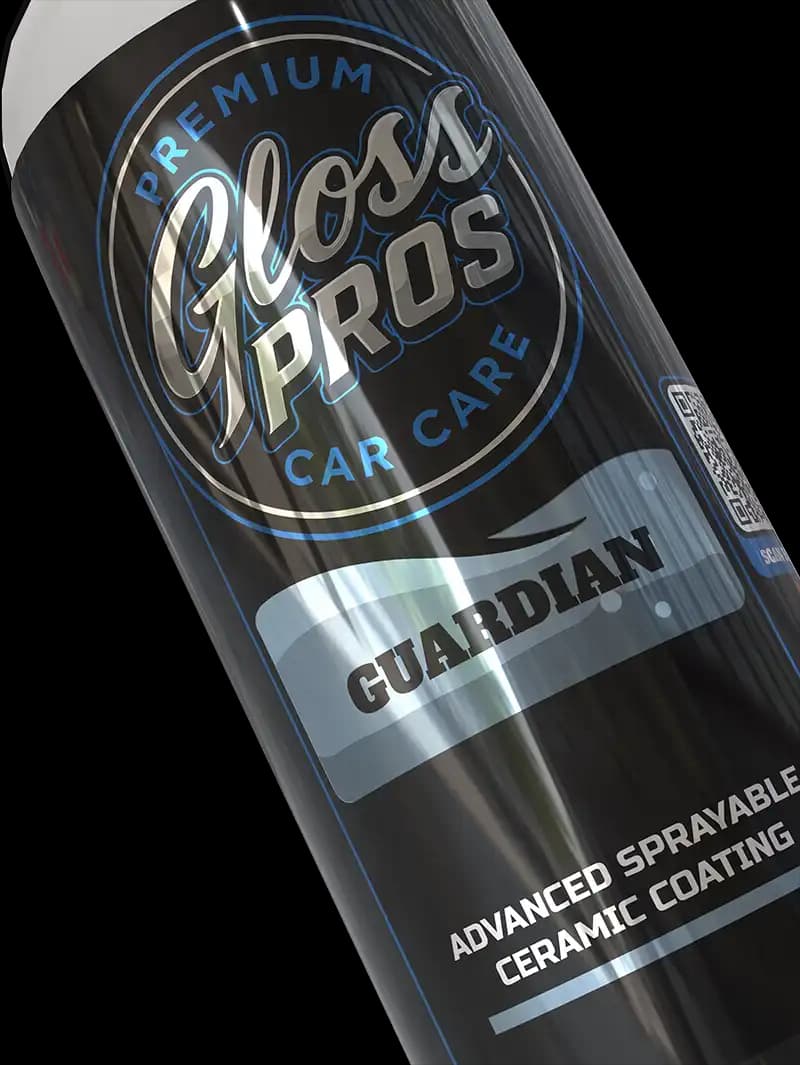
If you’re shopping specifically for a 9H-rated option, Gloss Pros Guardian is rated at 9H hardness and built to be an easy-to-apply, sprayable ceramic coating for long-lasting protection.
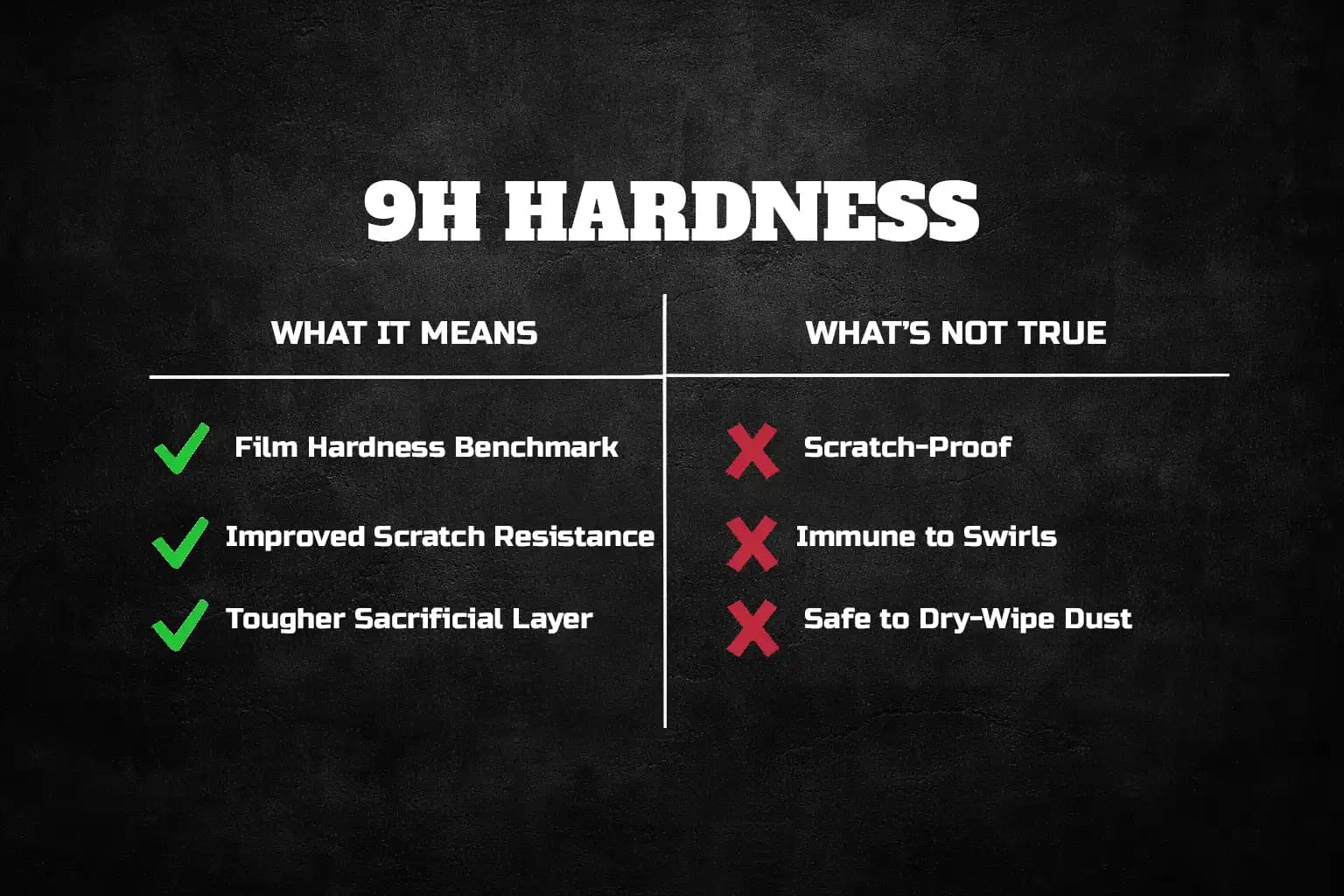
Let’s knock out the three biggest misconceptions the average consumer has quickly:
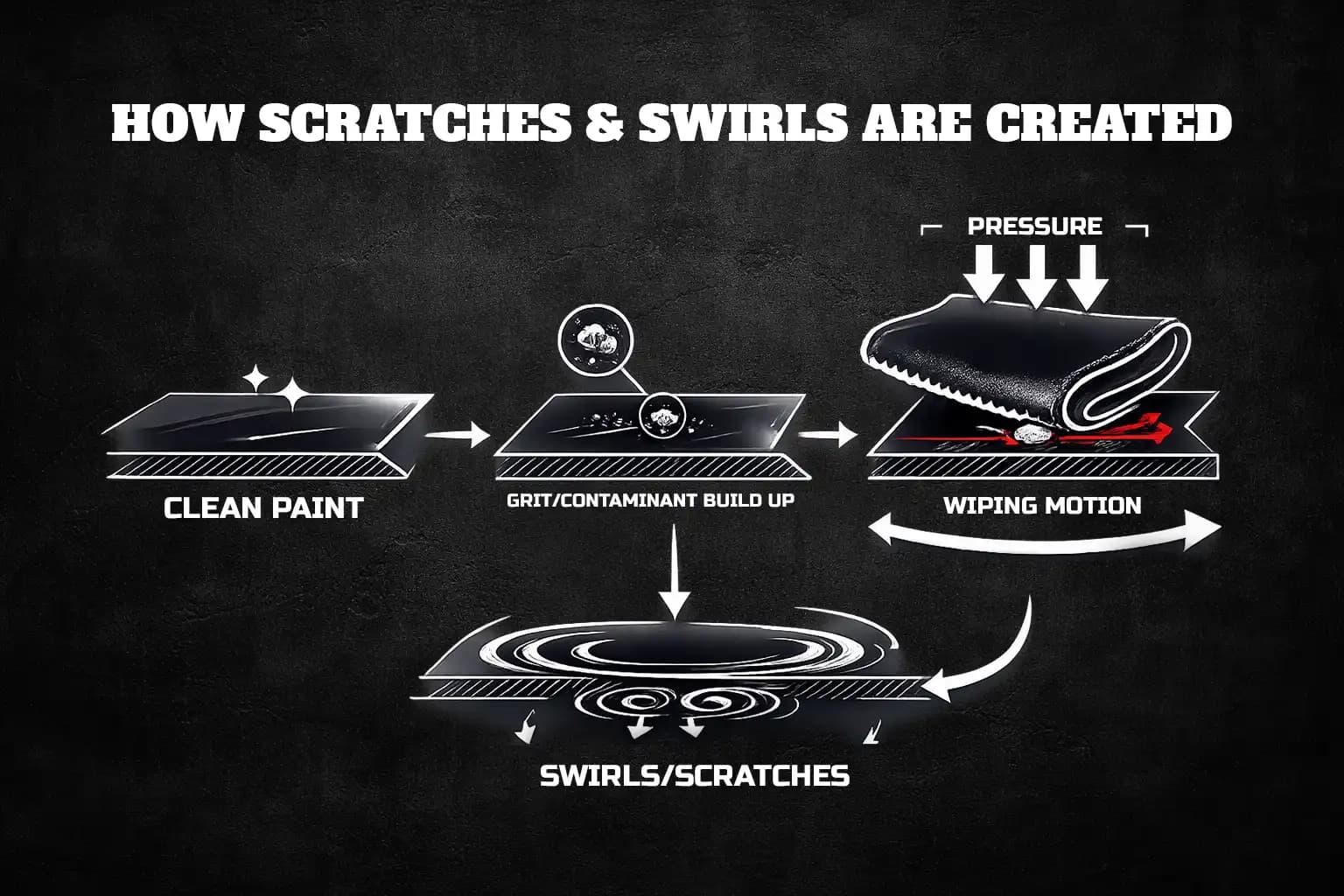
Even strong coatings can still get wash marring if you drag grit across the surface. Coatings reduce friction and help grime release. They don’t repeal physics.
Water behavior is a great sign, but durability also depends on:
Longevity claims vary because everyone’s “real life” varies. Garage-kept weekend cars live a different life than a daily driver parked outside.
When the product and process are right, ceramic protection is a legit upgrade:
Gloss Pros Guardian is designed specifically around these real-world benefits, including strong hydrophobic and oleophobic properties and UV/IR protection.
“Lasts” can mean different things. You might notice performance changes in this order:
A realistic way to think about durability is:
The coating lasts as long as the bond + maintenance allow it to.
A coating bonds best to paint that’s clean, bare, and free of oils and embedded contamination. If you coat over junk, the coating is effectively bonding to the junk.
Here’s a practical “prep ladder” you can pick from based on time and goals.
Gloss Pros Guardian applies best to a surface that’s clean and contaminant-free. If your paint feels rough after washing, that’s a sign you’ll benefit from decon before application.
Most “ceramic problems” aren’t the coating. They’re the application.
If you want the easiest way to stay consistent, treat the process like a rhythm: apply → level → final buff → move on.
If you want ceramic protection to look good long-term, your wash routine matters.
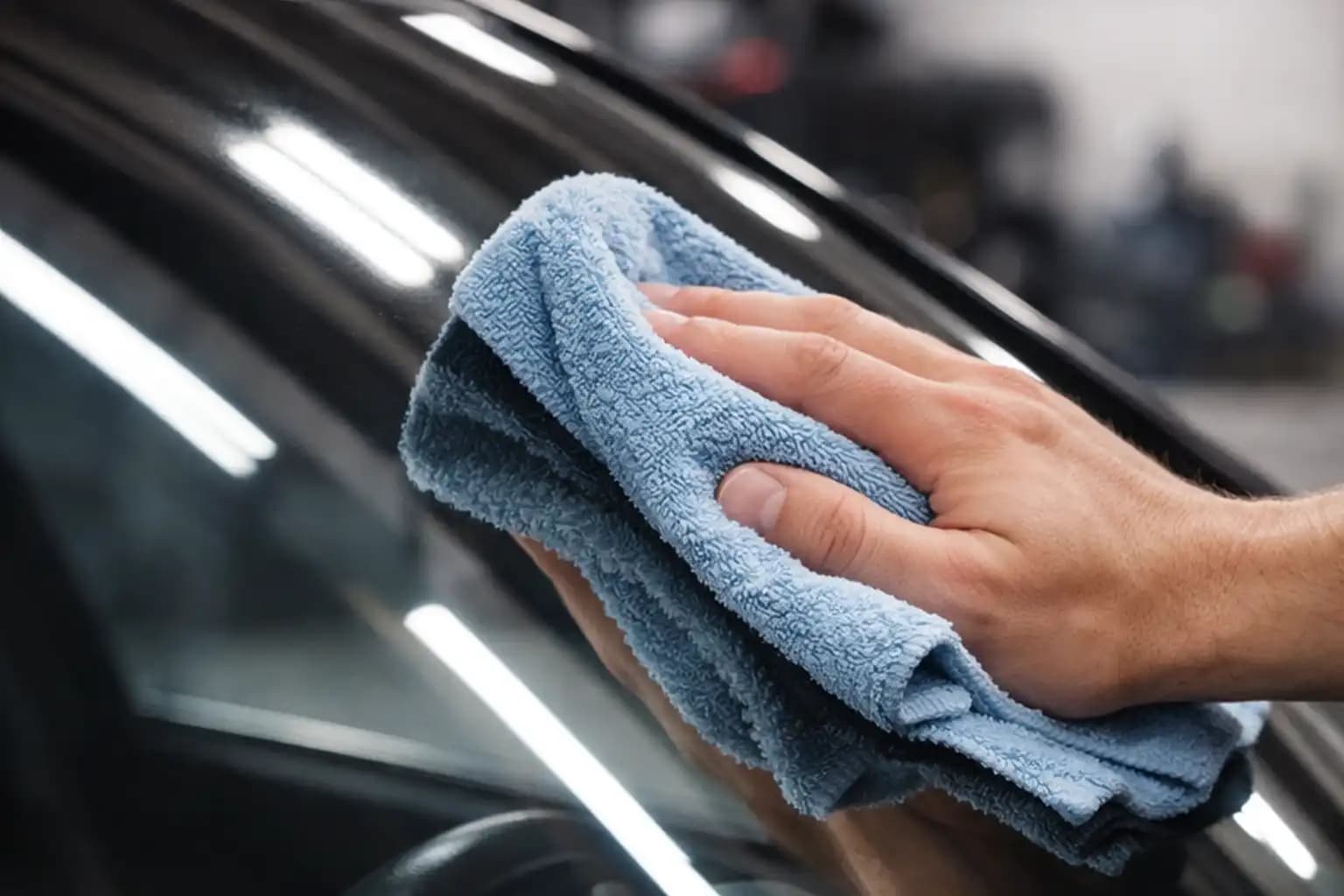
If you do nothing else, do this: pre-rinse well, use a slick wash soap, and dry with clean microfiber. For wash chemistry context, see why pH-balanced wash soap matters. For visibility and finish quality, pair this with a streak-free glass routine.
A simple maintenance stack that makes sense:
Ceramic coatings are not “scratch proof.”
They are high-performance protection that makes paint easier to clean, easier to dry, and easier to keep looking glossy when you do the basics correctly.
If you want a coating-style result without a complicated install, Gloss Pros Guardian is a sprayable ceramic coating built for easy application, strong hydrophobic/oleophobic behavior, and a 9H-rated cured layer.
It can improve scratch resistance in certain situations, but it won’t make paint scratch-proof. Bad washing and gritty towels can still cause swirls.
“9H” refers to a hardness rating of the cured protective layer. It’s commonly used as a benchmark for film hardness, not a guarantee against every type of scratch.
Do better prep, apply out of sunlight, let it cure properly, and use safe wash technique. Most coatings “fail” because of wash habits, not because the product disappears.
Not always. If your paint is already in good condition, you can skip it. If you want maximum gloss and a cleaner finish, a light polish before coating is a big upgrade.