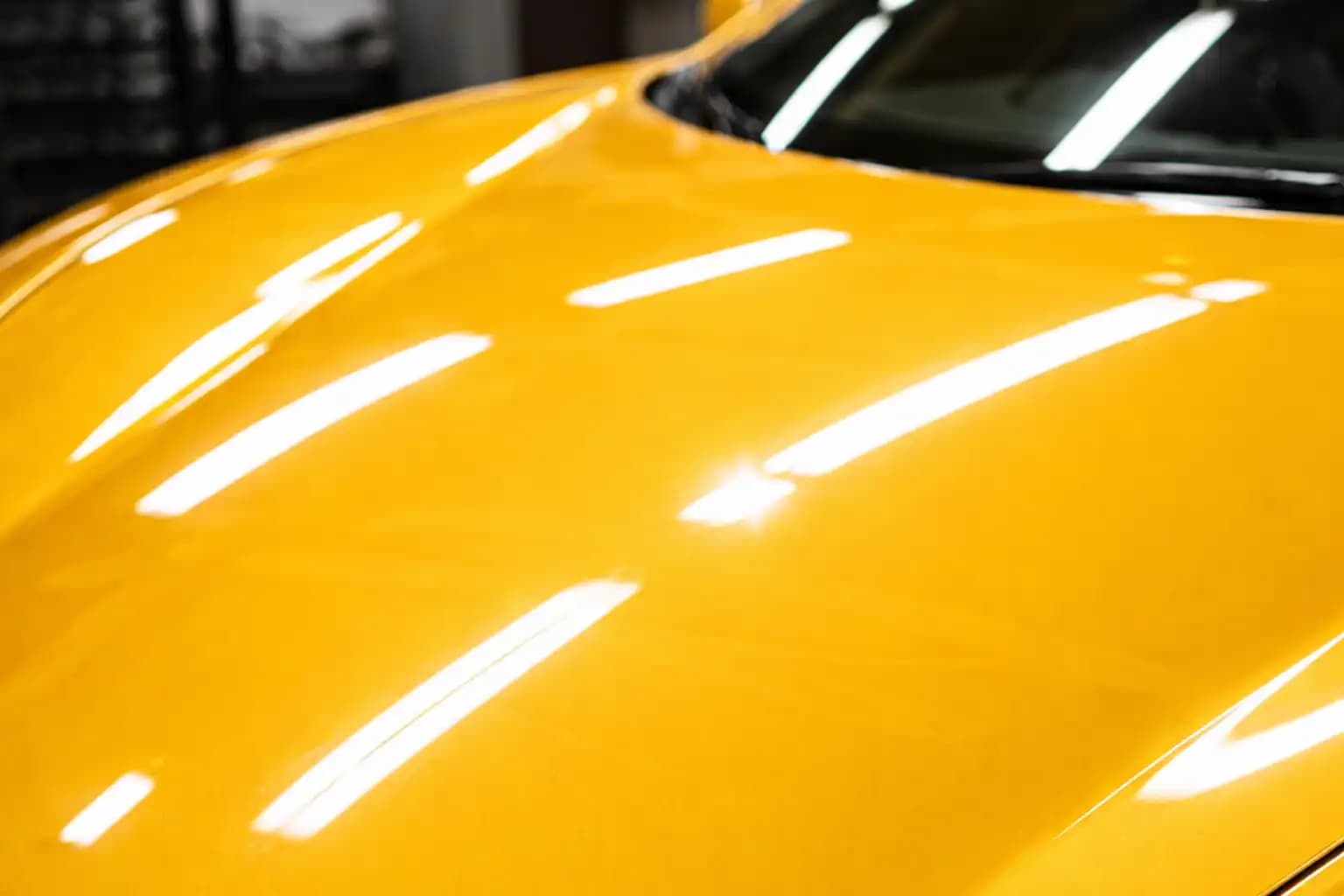
A car can look clean and still feel rough.
That roughness usually comes from bonded contamination: things like embedded fallout, overspray, road film, industrial dust, tree sap residue, and other stubborn debris that a normal wash does not fully remove. If your paint feels gritty after washing, it may be time to clay your car.
That leads to a common question in car detailing:
Should you use a clay bar, a clay mitt, or a clay towel?
All three are designed to remove bonded contamination from your paint, but they do not all feel the same in use, and they are not all equally forgiving. Here is how to choose the right option for your car, your experience level, and your detailing goals.
Paint can look clean but still feel rough if bonded contamination is stuck on the surface.
What claying a car actually does
Claying removes contamination that sits on top of the paint but is too stubborn to come off during a standard wash.
When clay media glides across a properly lubricated surface, it grabs and pulls away those bonded particles. The result is paint that feels smoother, looks cleaner, and is better prepared for polishing, wax, sealant, or ceramic protection.
Claying is not the same as paint correction. It does not remove swirl marks or scratches. It is a paint decontamination step.
How to tell if your car needs clay
One of the easiest tests is to wash and dry the vehicle, then lightly run your fingertips across the paint. If it still feels rough, gritty, or grabby, there is a good chance contamination is still stuck to the surface.
You may want to clay your car if:
- The paint feels rough after a wash
- You are preparing for polishing or a coating
- You have stubborn contamination that keeps surviving normal washes
- You want a smoother finish before applying protection
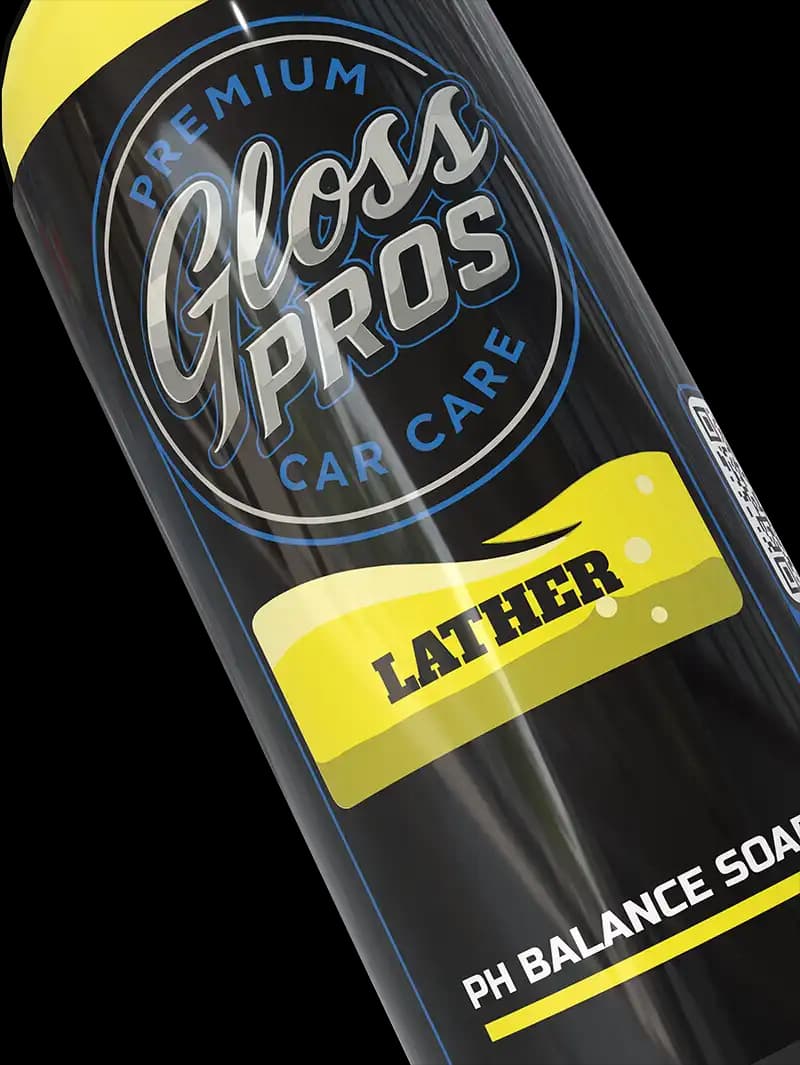
For the wash step, start with Gloss Pros LATHER wash soap. LATHER is labeled as a pH-balanced wash soap that cleans effectively while maintaining shine and surface protection, making it a strong prep step before decontamination.
Clay bar vs clay mitt vs clay towel
All three decontamination tools aim to do the same job. The biggest differences are control, speed, feel, reusability, and margin for error.
Clay bar
A traditional clay bar is still the reference point for many detailers because it offers strong tactile feedback and precise control.
Best for:
- Spot decontamination
- Tight or delicate areas
- Detailers who want maximum feel
- Slower, more controlled work
Pros:
- Excellent surface feedback
- Easy to control in smaller sections
- Good for targeted contamination
- Long track record in detailing
Cons:
- Slower than a mitt or towel
- Can be messier to use
- Usually must be discarded if dropped
- Demands patience and good lubrication
A clay bar gives you the best feel for what is happening on the paint. That can be a big advantage, but it also means technique matters.
Clay mitt
A clay mitt is usually easier to handle than a traditional clay bar and often speeds up the process.
Best for:
- Beginners
- Routine paint decontamination
- Faster full-vehicle work
- Users who want easy handling
Pros:
- Faster than a clay bar
- Easy to grip
- Reusable
- Convenient on larger panels
Cons:
- Less precise than a clay bar
- Can feel less delicate in tight areas
- Quality varies a lot by brand
A clay mitt is often the best middle ground for people who want a blend of safety, speed, and usability.
Clay towel
A clay towel usually prioritizes speed and panel coverage even more than a mitt.
Best for:
- Larger vehicles
- Maintenance details
- Users who value efficiency
- Faster decontamination workflows
Pros:
- Very fast
- Covers large sections quickly
- Reusable
- Convenient for regular maintenance
Cons:
- Less precise than a clay bar
- Easy to rush with
- Not always the first choice for delicate work
If you want the fastest way to remove contamination from paint, a clay towel is often the efficiency pick.
Which one is best for beginners?
For most beginners, the best option is the one that encourages slow, controlled passes with plenty of lubrication.
In practice, many people find a clay mitt easier to hold and manage than a traditional clay bar. A clay bar may offer more feel, but it usually demands a little more patience and discipline.
A safe beginner workflow looks like this:
- Wash thoroughly first
- Work on cool paint in the shade
- Use plenty of lubricant
- Start with light pressure only
- Check your media often
- Work one small section at a time
No matter which clay media you use, rushing increases the chance of marring the paint.
Do you need clay lubricant?
Yes.
You should never drag clay across dry paint. Lubrication is what helps the media glide over the surface instead of sticking, chattering, or dragging.
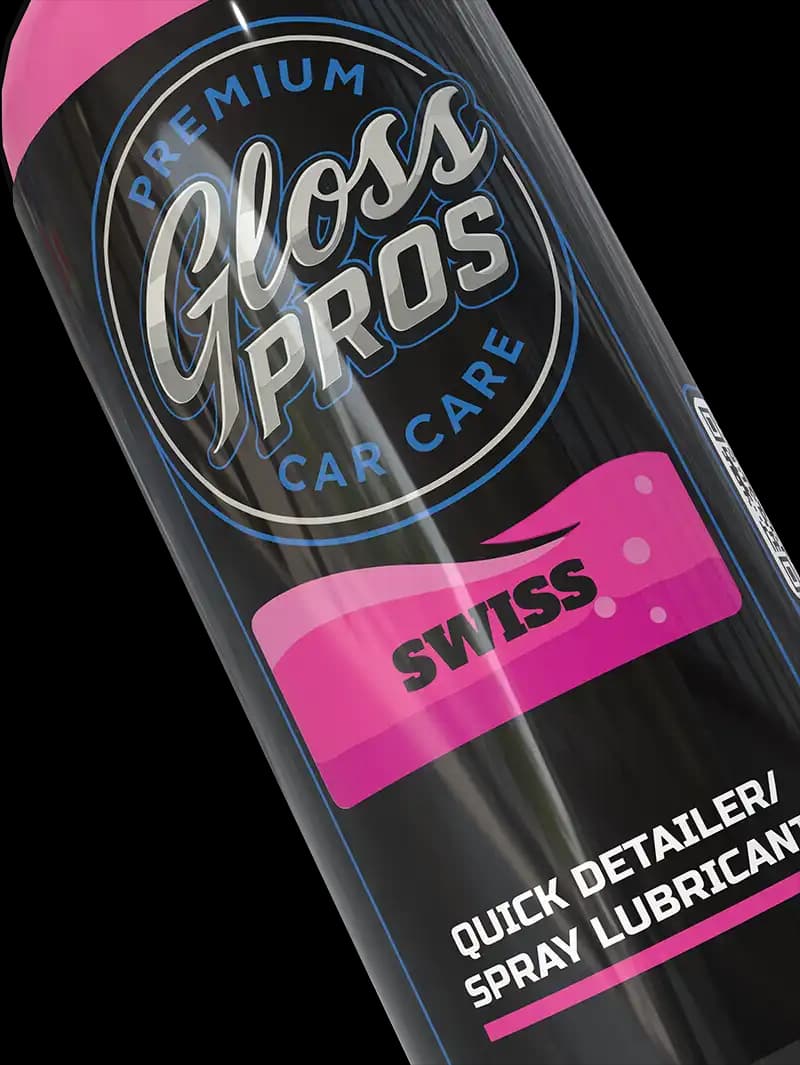
This is where Gloss Pros SWISS quick detailer fits naturally into the process. SWISS is labeled as a versatile quick detailer and spray lubricant that can also be used as a clay bar lubricant. The label also notes that it is designed for paint, glass, and plastic and helps remove light dust, smudges, fingerprints, and dirt while leaving a streak-free finish.
That makes SWISS a practical fit for this workflow because it is not a one-job bottle. It earns its place in a detailing kit before, during, and after the wash.
SWISS works naturally in this workflow because it is labeled as both a quick detailer and a clay bar lubricant.
Clay bar vs clay mitt vs clay towel at a glance
Choose a clay bar if:
- You want the most control
- You are working on smaller or tighter areas
- You prefer a more traditional detailing process
- You do not mind taking more time
Choose a clay mitt if:
- You want the best balance of speed and control
- You are newer to claying
- You want something reusable and easy to manage
Choose a clay towel if:
- You want the fastest workflow
- You are maintaining a larger vehicle
- You value efficiency over precision
How to clay a car without scratching the paint
Marketing claims matter a lot less than technique.
1. Wash the car first
Start with LATHER to remove loose dirt, grime, and bugs before any contact decontamination. LATHER is labeled as pH balanced and specifically notes that it does not remove existing protection.
2. Work on a cool surface
Do not clay hot paint. Shade and cool panels make the process more predictable.
3. Use enough lubrication
Mist your section generously with SWISS spray lubricant so the clay media can glide freely.
4. Use light pressure
Let the clay do the work. Pressing harder does not improve results. It usually just increases the chance of marring.
5. Work in small sections
A section around 2 ft x 2 ft is usually manageable. Use straight, overlapping passes rather than random aggressive scrubbing.
6. Wipe and inspect
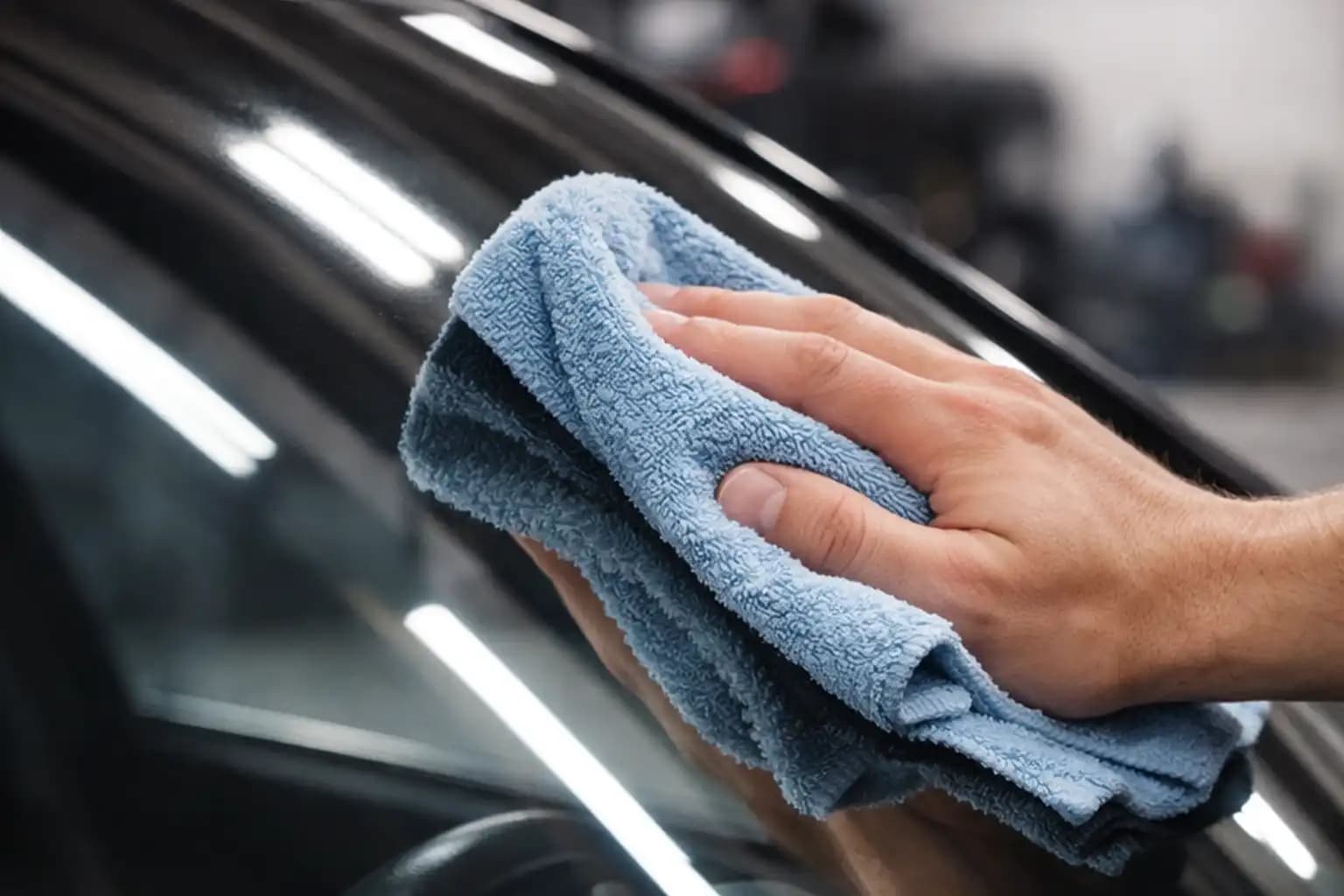
Once the paint feels smooth, wipe the section clean with a soft microfiber towel and check your progress.
7. Repeat only as needed
If the surface still feels rough, repeat gently. Do not attack the paint with force.
What to do after claying
Claying leaves the surface cleaner and smoother, but it is not the final step.
After claying, most people will want to follow with one of these:
- A polish, if correction is needed
- A sealant or coating, if protection is the goal
- A quick protectant, if you want an easier maintenance step
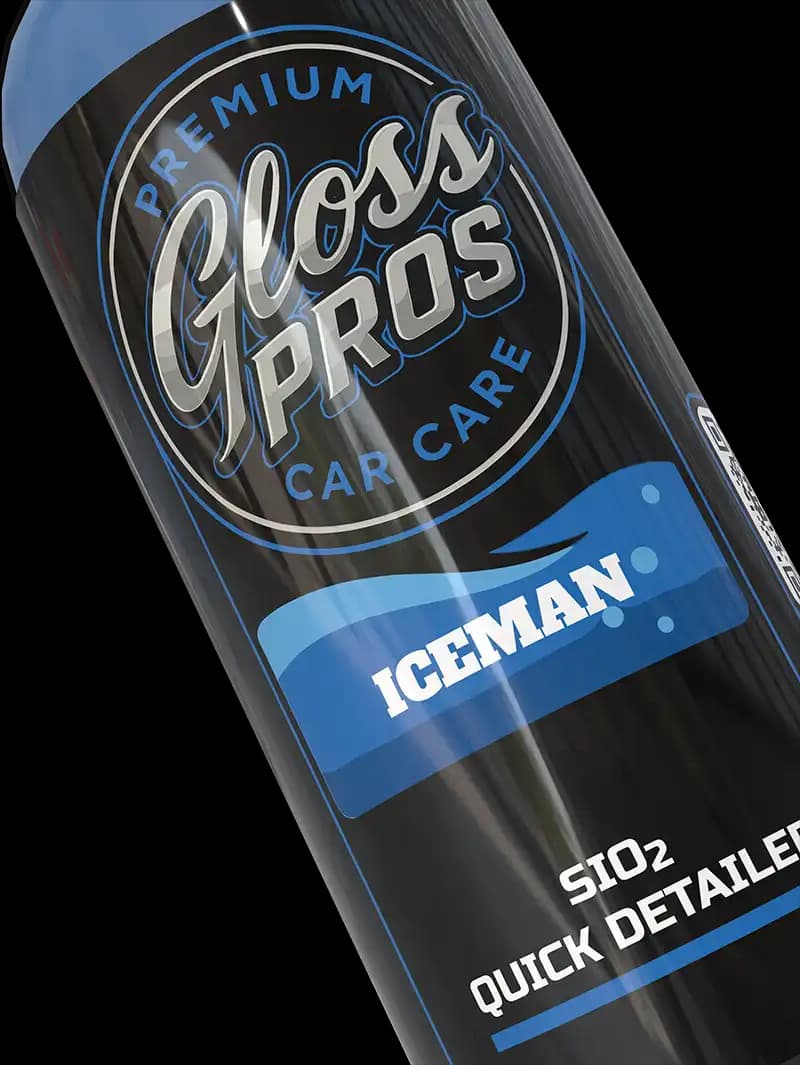
For a simple next step, ICEMAN SiO₂ quick detailer fits well here. ICEMAN is labeled as a fast SiO₂ detailer that enhances gloss, adds a protective barrier, boosts hydrophobicity, and works on coated and non-coated exterior hard surfaces.
Once the paint is decontaminated, your protection step goes on more evenly and the finish feels noticeably smoother.
Are clay bars outdated?
Not really.
Clay mitts and clay towels are faster, more reusable, and often more convenient. But a clay bar still has a place because it offers excellent control and feedback.
The better question is not whether clay bars are outdated. It is whether they are the best tool for your specific job.
For some people, yes.
For others, a mitt or towel is the smarter choice.
Our take
If you want the most precision, choose a clay bar.
If you want the best balance for most car owners, choose a clay mitt.
If you want speed on larger jobs or regular maintenance details, choose a clay towel.
Whatever you choose, the real keys are proper prep, proper lubrication, and a patient hand. A smoother finish starts before your protection step, and choosing the right decontamination tool makes every step that follows easier.
A simple Gloss Pros clay workflow
- Wash with Gloss Pros LATHER
- Choose your clay media: bar, mitt, or towel
- Lubricate the surface with Gloss Pros SWISS
- Wipe clean with a premium microfiber towel
- Follow with ICEMAN if you want an easy gloss and protection step
If your paint feels rough after a wash, claying can make a dramatic difference. The trick is choosing the right tool, using the right lubricant, and taking your time.